Sóller curiosities
A valley cut off by the mountains that always looked to the sea: from oranges shipped to France to a modernist bank, a private railway and a Moors and Christians battle replayed every May. Twenty checked facts about Sóller.
- Corsair raid
- 11 May 1561
- Train and tram
- 1912 and 1913
- Tramuntana UNESCO
- 2011
- Population
- 13,882 (2025)
Quick summary
- The mountains kept Sóller cut off from Palma well into the 20th century, so it traded by sea with France.
- Many locals emigrated to France and elsewhere; the money of those who returned paid for the Banc de Sóller and the modernist houses.
- On 11 May 1561 Algerian corsairs attacked the area: Es Firó recalls it every year with a Moors and Christians battle.
- The train (1912) and tram (1913) were largely paid for by the locals, and the road tunnel dates from 1997.
- The Serra de Tramuntana has been a UNESCO World Heritage site since 2011, and local speech keeps the salat article (es, sa) and French loanwords.
Updated: 2 November 2026
History: a valley facing the sea
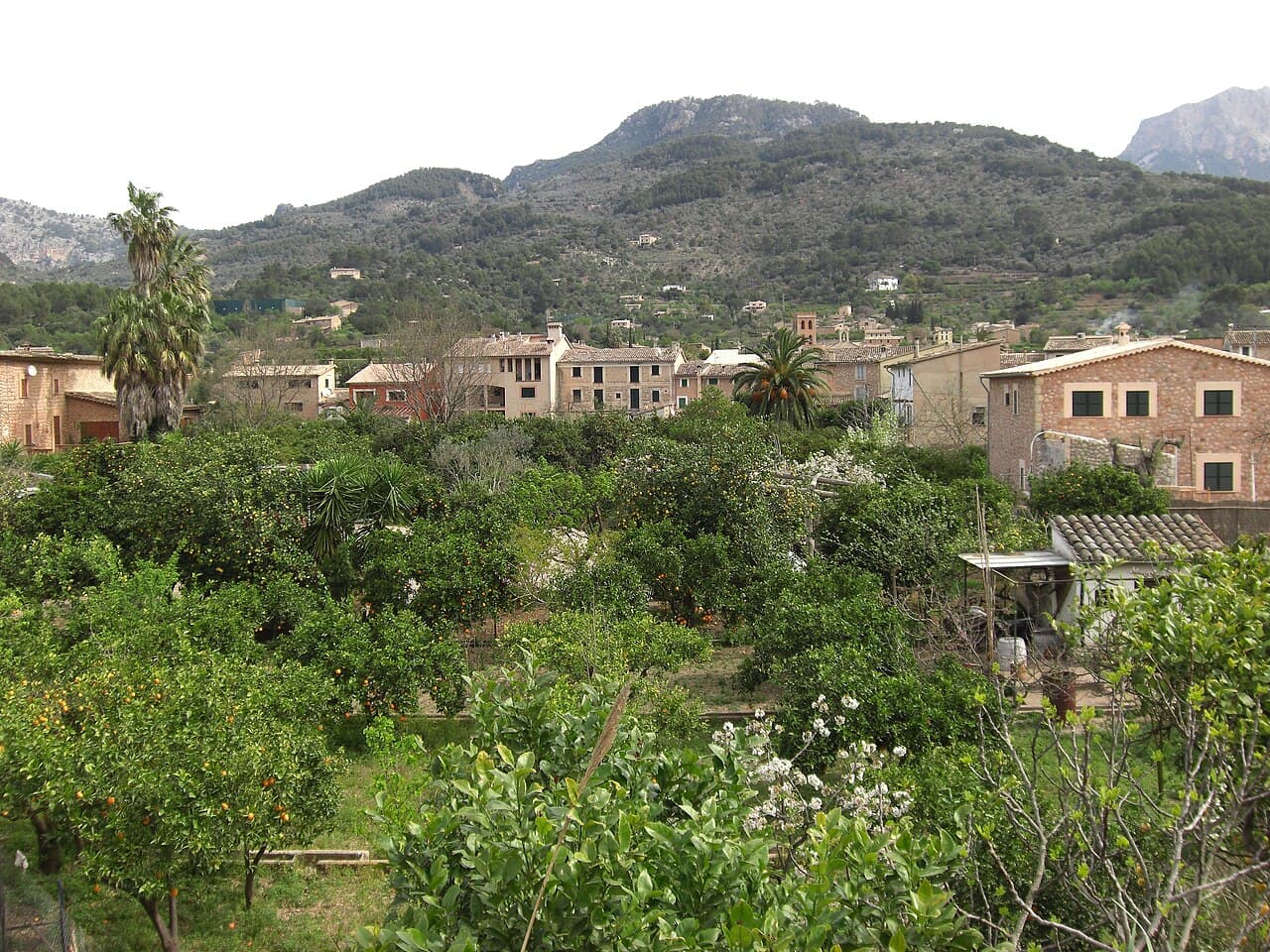
- The name. It is attributed to an Arabic origin and usually translated as "golden valley" or "golden bowl", after the orange groves. That is a popular explanation, not a settled etymology. What is certain: the town's coat of arms carries a sun, a pun on the first syllable of the name.
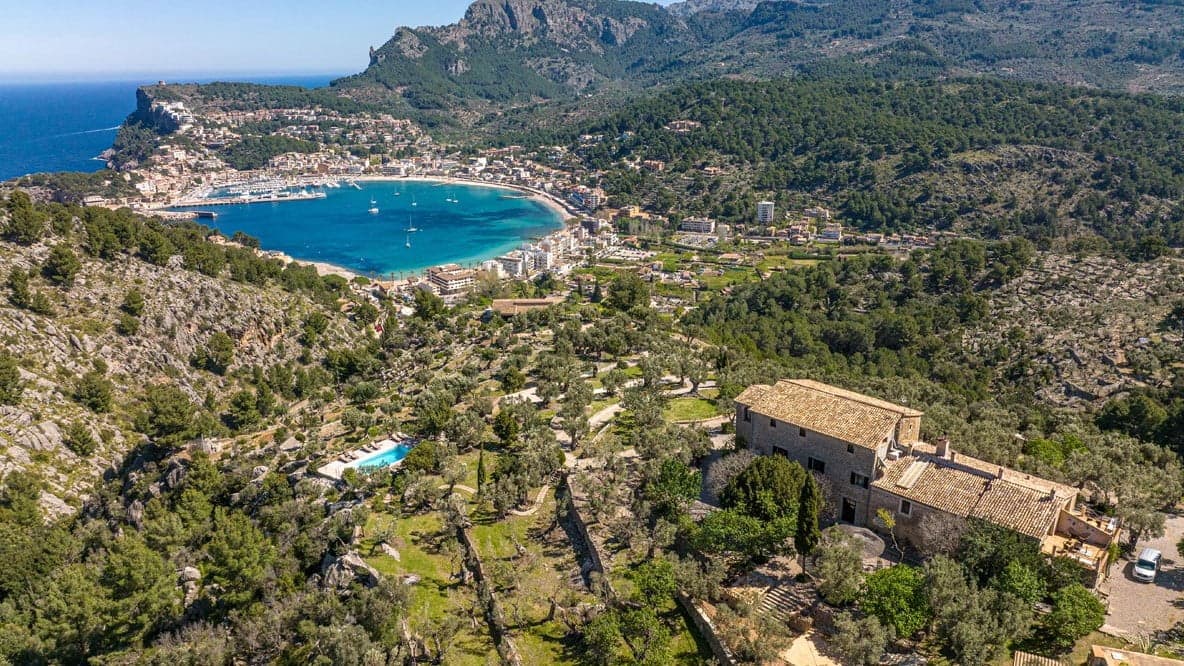
- An isolated valley. The Serra de Tramuntana separated it from Palma, so fruit left through the Port for France. How that trade worked, and why oranges matter so much, is covered in the guide to Sóller oranges and local produce.
- Sóller and France. In the late 19th century an agricultural crisis hit the valley's orange production. Many locals went first to the Languedoc and then to other parts of France; others emigrated to Belgium, Germany, Luxembourg, Switzerland and Puerto Rico. Many came back in the mid-20th century. French politicians with roots in Sóller still exist, such as Christophe Castaner.
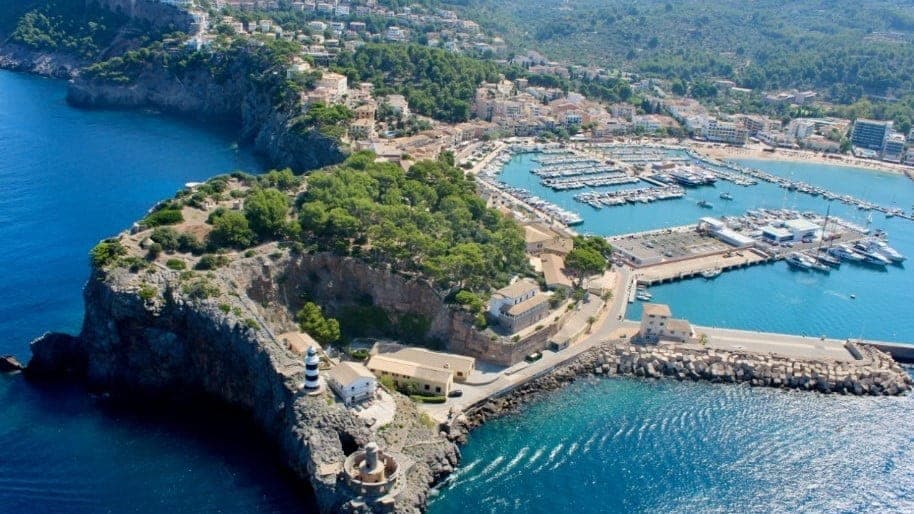
- 11 May 1561. A fleet of about 22 galleons of Algerian corsairs attacked the coast: part of the force landed near the Port and another attacked the town from the north. Afterwards the Torre Picada and the Port castle were built.
- Es Firó. That battle is re-enacted in May in four fights, at Platja d'en Generós, Platja d'en Repic, Pont d'en Barona and the town square. Dates and details are in the guide to what to see in Sóller.
- An industrial town. During industrialisation it had up to twelve factories, mostly textile, exporting to Mallorca and France.
- Fornalutx, the separated sibling. It shared a municipality with Sóller for a long time and became independent for good in 1837. It is still in the same valley and belongs to the association of the Most Beautiful Villages of Spain.
Train, tram and tunnels
- A train built by the locals. To end the isolation, the people of Sóller financed a railway with a long tunnel under the mountains. The first train arrived on 30 September 1911 and the Palma - Sóller line opened in 1912. It is 27.3 km long and keeps its original 914 mm gauge. It is one of the few private railways in Spain. Full details are in the Sóller Train guide.
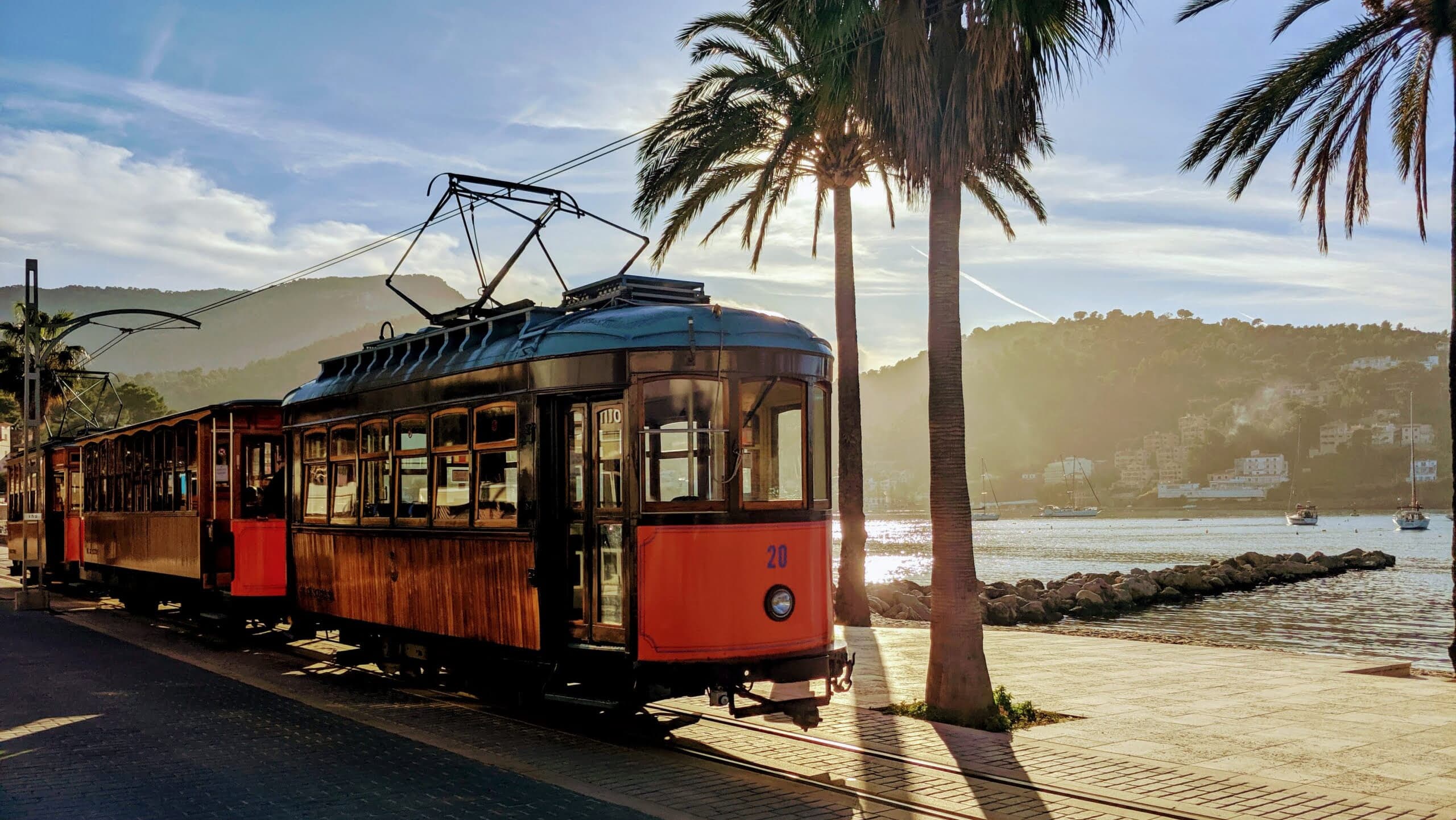
- The tram to the port. It opened on 4 October 1913 and runs 4.9 km. More on the route in the Sóller Tram guide.
- Nearly closed in 1973. The company asked the state to close it because of money problems; tourism ended up saving the line, which has carried over a million passengers a year since 2019.
- The road tunnel. The Palma - Sóller road tunnel opened in 1997. The toll disappeared at the end of 2017. Before that, the classic route was the Coll de Sóller pass, today the detour when the tunnel closes: see the 2026 night closure.
Architecture: from bank to modernist museum
- A bank funded by emigrants. The Banc de Sóller was founded in 1889 with capital from emigrants who came home wealthy. The current building (1909 to 1912) is by Joan Rubió i Bellver, a pupil of Gaudí, and has been a Bien de Interés Cultural since 2000.
- A church of three eras. Sant Bartomeu existed before 1236. Its interior is mostly Baroque (1688 to 1733) and the modernist, neo-Gothic façade dates from 1904, also by Rubió.
- Can Prunera. A modernist house built between 1909 and 1911 by the merchant Joan Magraner, "Joan Prunera", turned into a museum in 2009. Its architect is not documented with certainty: Rubió is suggested, but some historians dispute it.
- Gran Hotel Sóller. A 19th-century building in the centre, designed by Joaquín Pavía Birmingham according to the hotel itself. More in historic hotels.
To see it on foot in 20 minutes, use the mini route in the article on Les Journées du Modernisme.
Nature: mountains, garden and museum
- World Heritage. UNESCO inscribed the cultural landscape of the Serra de Tramuntana in 2011 for its farming terraces, water systems and dry-stone buildings. It covers 30,745 hectares, under criteria (ii), (iv) and (v). Routes are in hiking in Sóller.
- A garden born from a house. The Jardí Botànic de Sóller was created in 1985 in the old garden of the Camp d'en Prohom house (1900) and opened to the public in 1992. It covers about one hectare and conserves endemic Balearic flora and plants from other Mediterranean islands.
- A museum inside the garden. The Museu Balear de Ciències Naturals opened on 9 May 1992 and has five rooms on the natural heritage of the Balearics. In the Port, the Museu de la Mar occupies the former Santa Caterina oratory; see the Port de Sóller guide.
Food and traditions
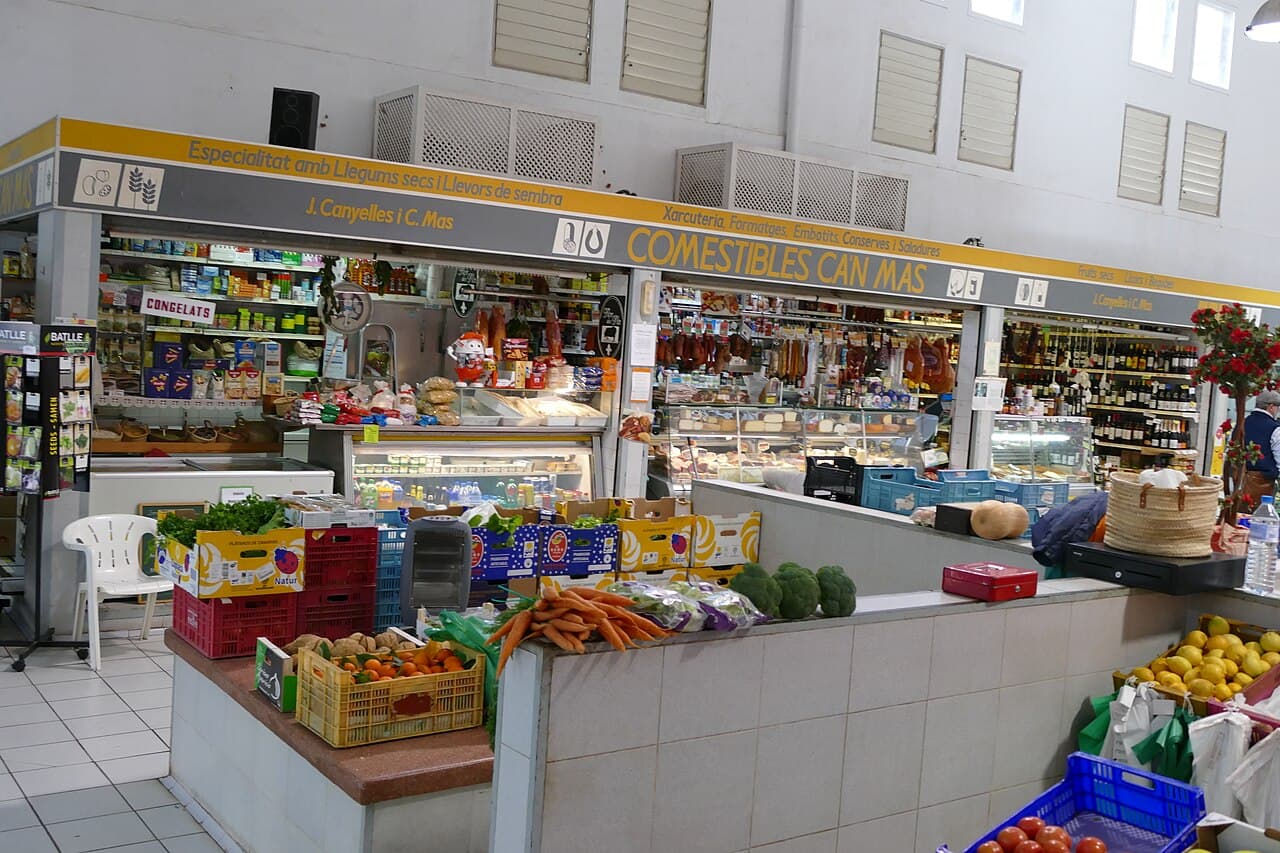
- The Canoneta and the Fira de la Taronja. The local orange has its own brand and every spring the valley dedicates a fair to it in the square. It is all in local produce, and fresh produce is at the Saturday market.
- Sa Mostra and the patron saint festival. Since 1980 the Mostra Internacional Folklòrica takes place in July, started by the group Aires Sollerics. The patron saint is Sant Bartomeu, celebrated in August with a correfoc.
Language and people
Speech. People in Sóller speak Catalan with their own accent, the parlar de Sóller, shaped by emigration and by many French loanwords. As elsewhere in Mallorca, the salat article is used: es and sa instead of el and la, and ses in the plural. Hence names such as plaça de sa Constitució, carrer de sa Lluna or Es Firó.
Well-known people. Born in Sóller or with roots there: the painter Gregorio Bausá (1590 to 1656), Bishop Mateu Colom (1879 to 1933), the philologist Albert Hauf (b. 1938), the musician Joan Miquel Oliver (b. 1974) of Antònia Font, and the footballer Tuni (b. 1982). Joan Marqués Arbona (1861 to 1955) founded the weekly Sóller.
Timeline: key dates
| Year | Event |
|---|---|
| 1236 or earlier | The church of Sant Bartomeu already exists |
| 1561 | Algerian corsair raid (11 May); origin of Es Firó |
| 1837 | Fornalutx becomes an independent municipality |
| 1889 | The Banc de Sóller is founded with emigrant capital |
| 1904 | Modernist façade of Sant Bartomeu |
| 1909 to 1912 | Banc de Sóller (current building) and Can Prunera |
| 1911 and 1912 | First train arrives (1911) and line inaugurated (1912) |
| 1913 | Tram to the Port opens |
| 1980 | First Mostra Internacional Folklòrica |
| 1985 and 1992 | Botanical garden created and opened to the public |
| 1997 | Road tunnel opens |
| 2009 | Can Prunera opens as a museum |
| 2011 | Serra de Tramuntana becomes a World Heritage site |
| 2017 | End of the tunnel toll (end of the year) |
Where to see each thing
- Banc, Sant Bartomeu, Can Prunera, botanical garden, natural sciences museum: what to see in Sóller.
- Train and tram: Sóller Train and Sóller Tram.
- Torre Picada, Museu de la Mar and the Es Firó sites at the port: Port de Sóller.
- Oranges and the Fira de la Taronja: local produce.
- Tramuntana: hiking.
Frequently asked questions about Sóller
Why is Sóller called Sóller?
It is attributed to an Arabic origin and is usually translated as "golden valley" or "golden bowl", after the oranges. That is the popular explanation; the town's coat of arms includes a sun alluding to the first syllable.
What is the link between Sóller and France?
The mountains isolated the valley and fruit left by sea for France. In the late 19th century, after an agricultural crisis, many locals emigrated there, mainly to the Languedoc, and local speech keeps French loanwords.
What happened in Sóller on 11 May 1561?
Algerian corsairs, with about 22 galleons, attacked the Port area and the town. Es Firó recalls it with a Moors and Christians battle.
When did the Sóller train and tram open?
The train in 1912 (the first one arrived on 30 September 1911) and the tram to the Port on 4 October 1913.
Who designed the Banc de Sóller?
Joan Rubió i Bellver, a pupil of Gaudí. The building dates from 1909 to 1912 and has been a Bien de Interés Cultural since 2000.
Since when is the Tramuntana a World Heritage site?
Since 2011, as a cultural landscape, for its farming terraces and water systems.
What is the salat article?
It is the use of es, sa and ses instead of el, la and los, typical of Mallorca and visible in names such as plaça de sa Constitució.
When did the Sóller tunnel open?
In 1997. The toll was removed at the end of 2017.
How many people live in Sóller?
13,882 according to the 2025 INE figures, in a 42.8 km² municipality that includes the Port, l'Horta and Biniaraix.
Where can I see modernist Sóller?
On the square: the Banc de Sóller, the Sant Bartomeu façade and Can Prunera, a few steps from each other.